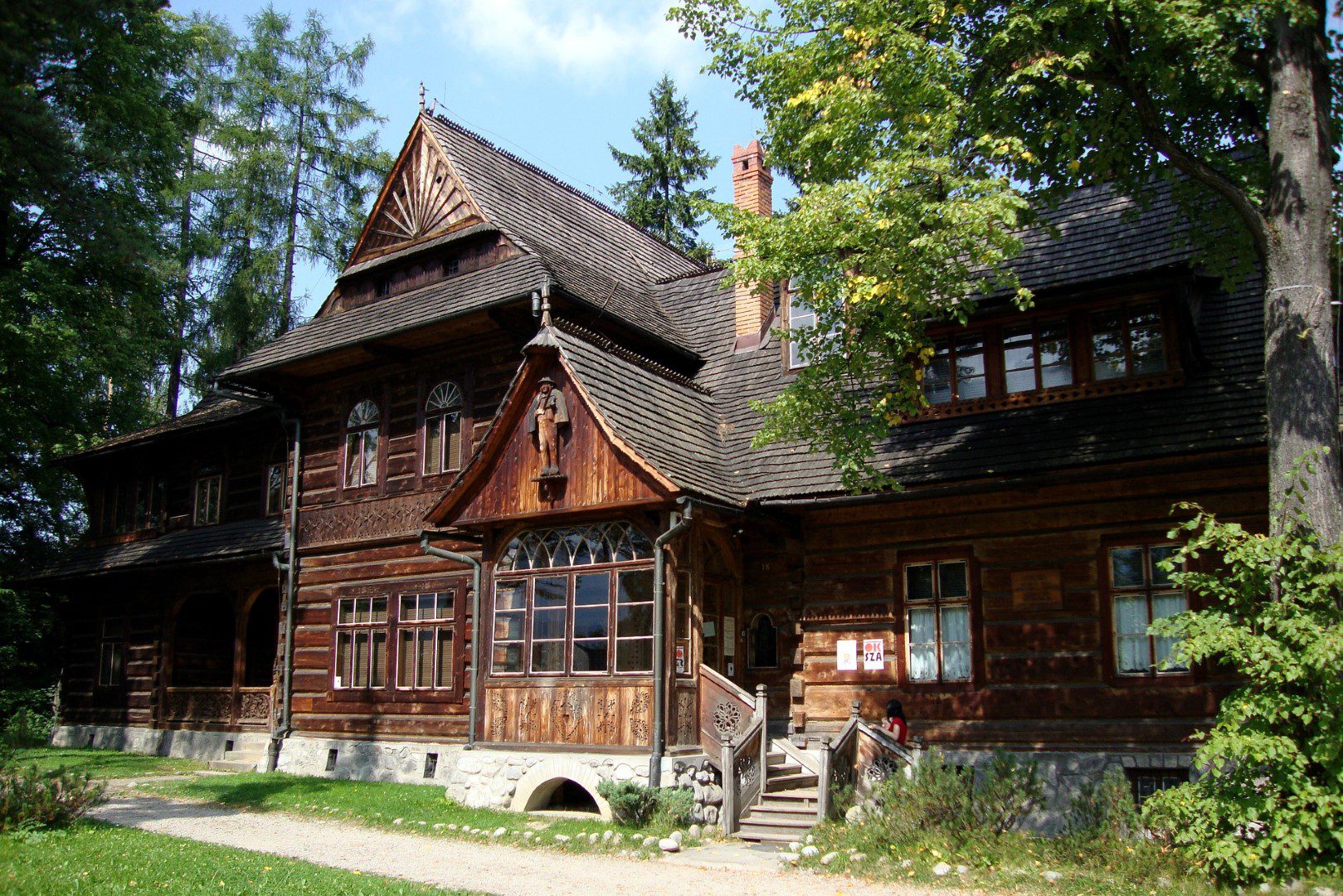
Zakopiański Dwór was born from a fascination with the regional architecture and culture of Podhale. The wooden building, inspired by manor-style and Zakopane-style architecture, is filled with works by local craftsmen, details inspired by the region, and an atmosphere that allows guests to feel the true spirit of the mountains. We encourage our guests to explore places where the history and culture of Zakopane are still alive.
Zakopane Style and Wooden Architecture
This is where the unique Zakopane architectural style, created by Stanisław Witkiewicz, was born, admired worldwide. Walking around the town, it is worth paying attention to historic villas, wooden guesthouses, and architectural details that harmoniously combine nature, craftsmanship, and inspiration from the Tatra Mountains.
Villa Koliba – Museum of Zakopane Style
The first house built in the Zakopane style is a must-visit for architecture enthusiasts. The villa’s interiors show how traditional highlander motifs penetrated applied arts and home decoration.
Villa Atma – Karol Szymanowski Museum
A historic wooden villa where one of Poland’s greatest composers created his works. This place combines music, history, and the unique atmosphere of old Zakopane. It is worth attending the many concerts regularly organized in this lively museum.
Cemetery at Pęksowy Brzyzek
One of the most symbolic places in Zakopane, located near the old church. Wooden and stone tombs of distinguished figures, often crafted by local artists, are a unique testimony to the history of Podhale and its outstanding residents, including Stanisław Witkiewicz, Kornel Makuszyński, Karol Stryjeński, and Sabala.
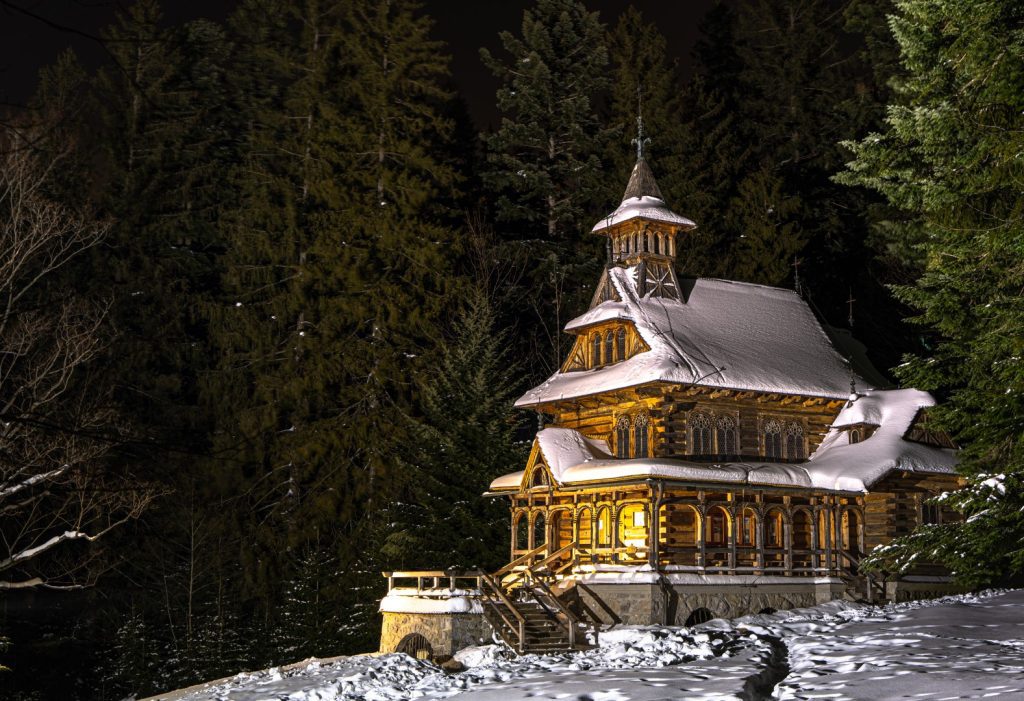
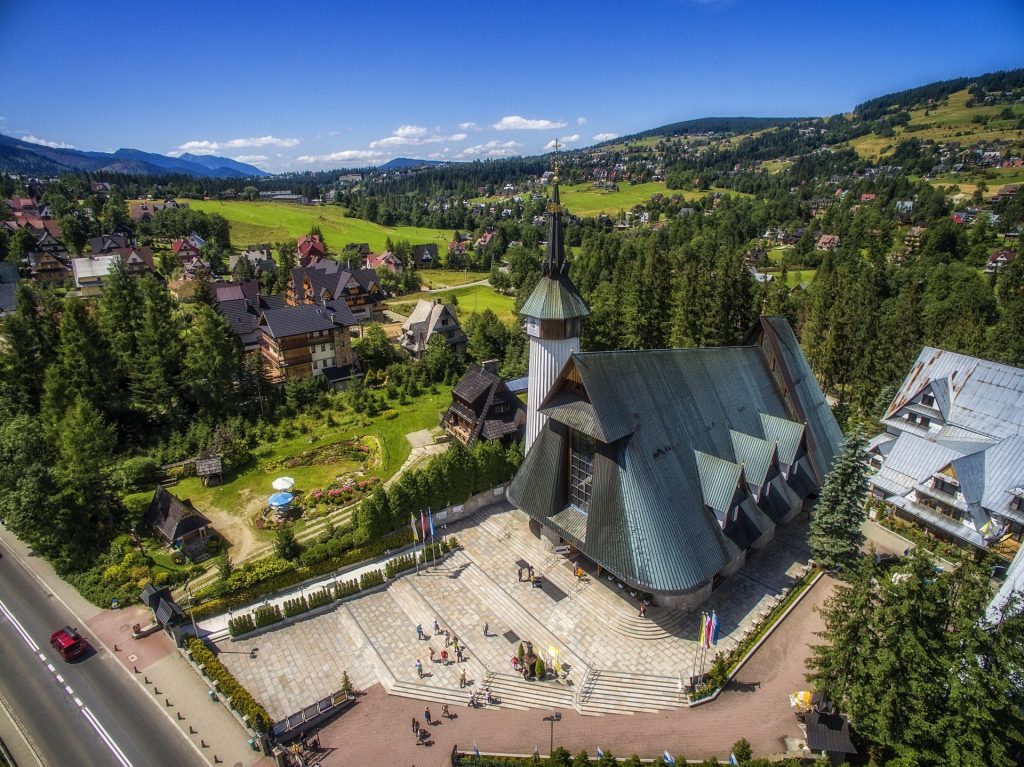
Old Church and Sanctuary of Our Lady of Fatima in Krzeptówki
The wooden church on Kościeliska Street is a gem of Podhale’s sacred architecture. The sanctuary in Krzeptówki is a special place for Catholics, built in gratitude for saving the life of Pope John Paul II after the assassination attempt on May 13, 1981, and referencing Marian apparitions in Portugal.
Tatra Museum – Dr. Tytus Chałubiński
An ideal place to better understand the history of Zakopane, highlander culture, traditional crafts, and daily life in Podhale. The exhibits help visitors appreciate how strongly tradition influences contemporary Zakopane.
Kościeliska Street
One of the oldest streets in the city, full of historic wooden houses and old highlander homesteads. Walking this route is a journey through time and an excellent opportunity to admire authentic regional architecture.
Galleries and Workshops of Local Artists
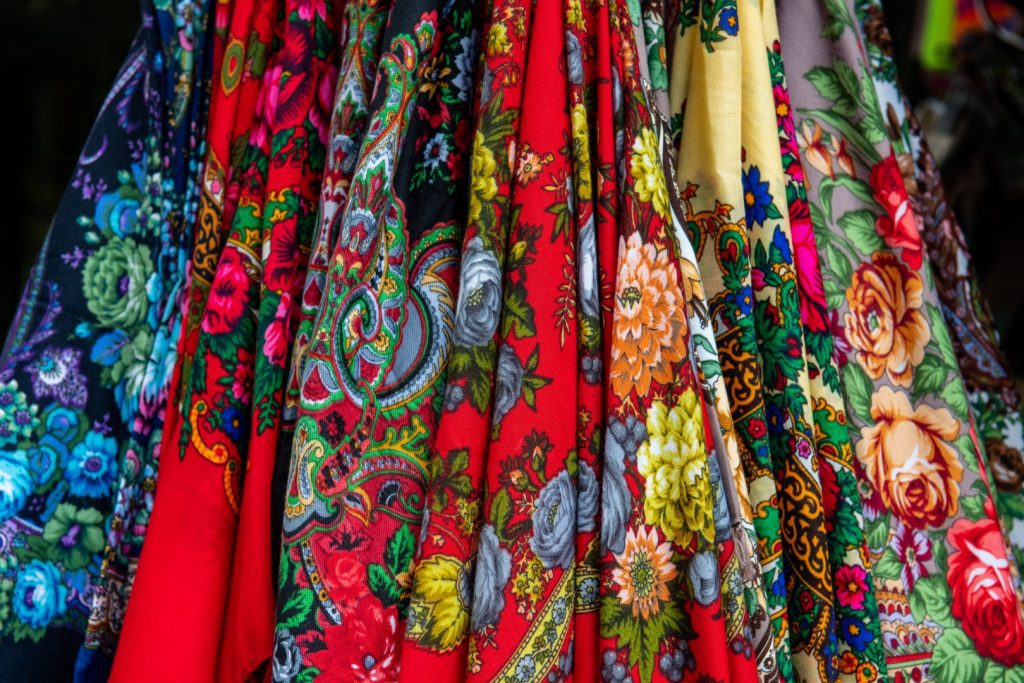
Zakopane is a place where traditional crafts continue to thrive. It is worth visiting galleries and workshops of woodcarvers, glass painters, and ceramic artists to see works inspired by highlander culture being created.
Staying at Zakopiański Dwór is not just accommodation but also an invitation into the world of Podhale’s history, culture, and beautiful wooden architecture, which has fascinated and inspired generations.